


At one year old, the brain is undergoing one of the most explosive phases of neural growth. Every texture touched, every light seen, every sound reacted to, becomes a building block in future learning. The question is no longer “pink or blue?” but “How does this toy support healthy brain development?”
And sensory toys, in particular, play a unique role.
Do Boys and Girls Have Different Needs at Age One? Research Says Yes — But Not in the Way You Think
Most scientists agree that gender differences at infancy exist, but they are developmental tendencies, not rigid rules.
1. Sensory Processing Differences
Research from the University of Cambridge has shown:
Infant girls tend to develop fine motor skills slightly earlier
Infant boys often show stronger early gross motor engagement
This does not mean “girls need delicate toys” or “boys need active toys.” It means the brain pathways being strengthened differ subtly. For a 1-year-old girl, this can translate into:
longer attention span on detail-oriented play
strong engagement with texture exploration
earlier interest in cause-and-effect mechanisms
But these are overlapping curves — not strict categories.
2. Emotional and Social Response
Psychologists have also found that infant girls, on average, show:
stronger early social referencing (reading faces, reacting to voices)
higher sensitivity to soothing rhythms and melodic sounds
This is why many parents notice that their daughters at one year old respond more to:
soft fabrics
gentle jingles
expressive faces on toys
Again, these are tendencies — not destinies.
3. Case Example
A commonly cited case in early childhood development is a 1-year-old girl named Ari. Her parents noticed she became unusually calm when touching textured fabrics or when playing with crinkly, soft materials. A developmental therapist later confirmed she had above-average tactile sensitivity, and sensory play dramatically improved her emotional regulation.
Stories like Ari’s reinforce an important truth:
Sensory experiences shape early emotional and cognitive development.
So What Does This Mean for Sensory Toy Choices?
For a 1-year-old girl, the most effective sensory toys tend to:
Support emotional soothing
Soft materials, rhythmic sounds, warm colors.
Encourage fine motor exploration
Pull tabs, buttons, crinkly corners, multi-texture surfaces.
Stimulate curiosity without overstimulation
Balanced lights, safe mirrors, gentle jingles.
Offer multi-sensory layers
Touch + sound + visual cues altogether strengthen neural pathways.
But here’s the key:
These developmental needs are universal for all children — not only girls.
A high-quality sensory toy works equally well regardless of gender.
And that’s where INFUNITY enters the picture.
How INFUNITY Sensory Toys Meet These Needs — Without Gender Labels
INFUNITY’s sensory toys were not designed with “girl toys” or “boy toys” in mind — and that is precisely what makes them developmentally aligned with modern research.
These toys focus on neuroscience-backed sensory stimulation rather than gender stereotypes.
1. Multi-Texture Designs That Encourage Exploration
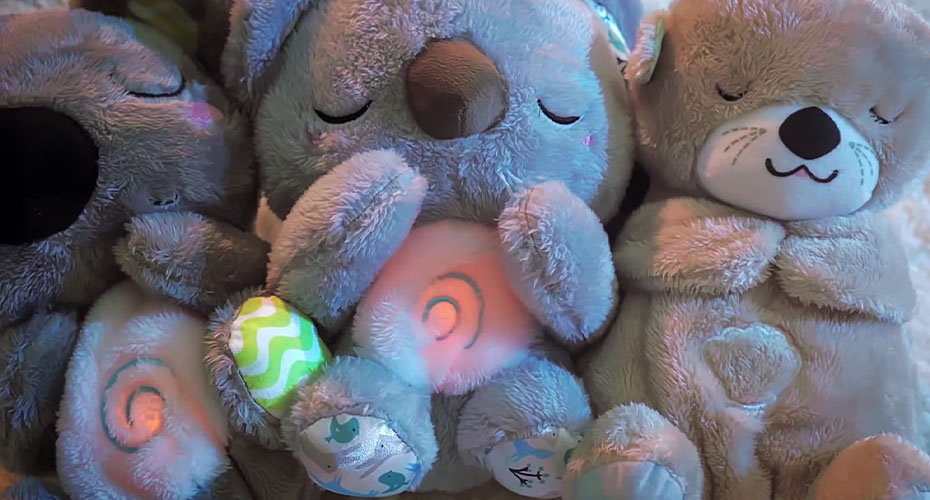
INFUNITY’s plush sensory toys use:
super-soft fabrics
ribbed textures
crinkle elements
safe stitching for tiny grips
For a 1-year-old girl who may naturally show more tactile engagement, these layers provide exactly the level of fine motor stimulation she needs.
2. Soothing Colors and Friendly Characters
Instead of overwhelming neon colors, INFUNITY tends to adopt:
warm, comforting palettes
gentle, baby-safe animal characters
visually balanced layouts
This reduces overstimulation — something infant girls are statistically more sensitive to.
3. Soft Sound Elements for Emotional Regulation
Several products feature:
gentle rattles
light jingles
rhythmic patterns
These sounds align well with what developmental psychologists call early auditory harmonics, helping babies regulate mood and attention.
4. Designed With Safety and Growth Science First
Because the company originated from a decades-old toy manufacturing background, INFUNITY products emphasize:
baby-safe materials
rounded edges
strict international testing
designs that promote sensory-motor learning
For a 1-year-old girl, this means the toys support both emotional security and cognitive exploration.
A Real-World Example: Gender-Neutral Design That Works
One parent shared that their daughter, Mila, ignored almost all “pink baby toys” at home. But she loved her INFUNITY sensory plush ball — soft, textured, with little tags to pull and squeeze.
Interestingly, Mila’s cousin, a boy, loved the exact same toy.
Developmentally, this makes complete sense.
Sensory needs are human needs, not gendered needs.
Why Parents Should Look Beyond Color and Marketing Labels
The toy industry often sells the illusion that gender defines play preferences. But scientists argue that:
Brain development is far more influenced by environment than by gender
Children learn best when toys are chosen based on skills, not stereotypes
Sensory play is one of the most universal forms of infant learning
For a 1-year-old girl, choosing thoughtful sensory toys is not about choosing pink — it’s about choosing toys that:
stimulate without overwhelming
comfort while encouraging exploration
respond to how children’s brains grow, not how marketing departments categorize them
INFUNITY’s design philosophy aligns perfectly with this.
Final Thoughts: What Truly Matters for a 1-Year-Old Girl
If there’s one takeaway from developmental research, it’s this:
A baby’s brain doesn’t know gender — it knows experiences.
A one-year-old girl thrives most when she is:
emotionally soothed
encouraged to explore textures, lights, and sounds
given safe pathways to build early fine motor skills
supported with toys that invite curiosity, not pressure
INFUNITY’s baby sensory toys stand out because they focus on these fundamentals.
They are not “girl toys.” They are growth toys.
And in the first year of life, that is what every child — girl or boy — truly needs.
 Recommended for You