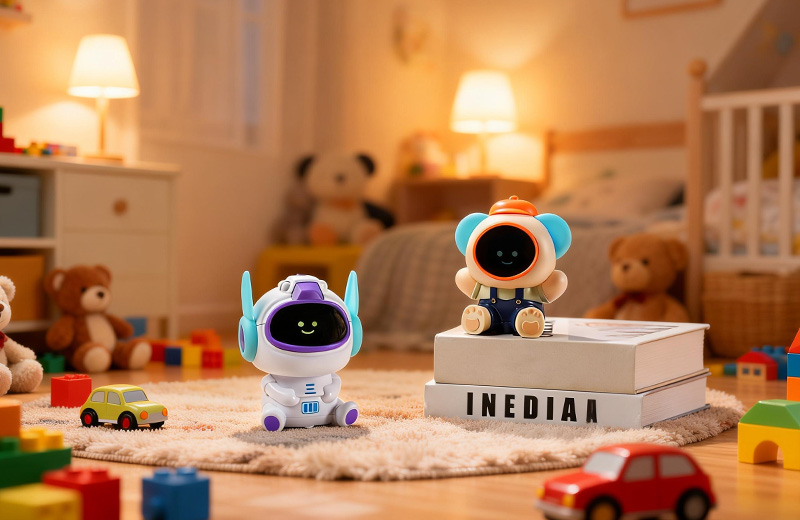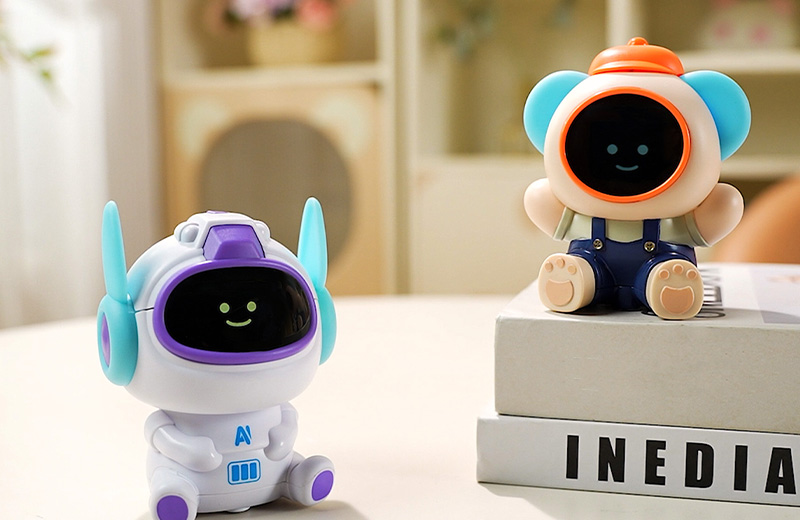


Key questions revolve around whether these toys — which respond to children with “love,” “friendship,” or empathy — could change how a child understands relationships with real people. Can a toy’s programmed affection, unlimited patience, or constant listening distort a child’s view of human social cues?
There’s also a concern about privacy: many AI toys record conversations, which might be shared with third parties for analysis — raising questions about data security, consent, and the child’s control over their own information.
The inequality factor
The Cambridge researchers point out a potential “digital divide”: AI toys are often expensive and might only be accessible to more affluent families, giving their children early exposure to AI — while others do not. That disparity could translate into unequal future comfort or familiarity with AI.
Dependence on AI toys might shift expectations: children accustomed to an AI companion might expect similar responsiveness elsewhere, perhaps undermining interest in “real-world” social interactions.
What has gone wrong — recent real-life examples
A family’s test of an AI toy called Grem highlighted what many call “unsettling” side effects: a 4-year-old quickly grew attached to it, treating it almost like a living friend — feeling comforted, telling it “I love you,” and expecting love back. The toy responded in kind.
But as soon as the novelty wore off, the child lost interest — suggesting maybe the toy never truly “replaced” real companionship, but rather filled a novelty gap.
Moreover, some children found the toy’s conversation repetitive, its “personality” shallow, and even its comprehension (e.g. of a child’s mispronunciations) unreliable.
These stories illustrate that while AI toys can seem alluring on paper — “responsive,” “interactive,” “more than a teddy bear” — in reality they may not deliver on the emotional depth, creativity or social learning we hope for.

Practical checklist — before you buy
If you still consider getting an AI toy, treat it like a potentially powerful gadget, not just a plush friend. Ask yourself:
Does the toy record and transmit data (voice, conversation, usage patterns)? If yes — who stores or processes it? For what purpose? Is there a clear privacy/consent policy?
Will this toy replace human interaction? Are you using it as a convenience substitute (e.g. to “keep the child busy” or provide company), or as occasional fun? If the former — it might harm social development.
Is the toy marketed as “friend,” “companion,” “safe confidant”? That’s a red flag: children may internalize these claims literally, potentially forming emotional attachments to a machine.
Can the child distinguish toy-AI responses from real human empathy? Without proper guidance, a child might blur the line — treating programmed responses as genuine human feelings.
Is the cost worth the potential tradeoffs? Considering issues of privacy, development, and emotional impact — you may instead invest in simpler, analogue toys that encourage creativity and human connection.
If you do choose to buy — how to do so responsibly
Use the AI toy in short bursts, not as a full-time “companion.” Treat it as a novelty or tool, not a replacement for real people.
Maintain open dialogue with your child: explain that the toy is a machine, not a friend, and that real relationships are different.
Supervise interactions — especially with younger children. Ensure that conversations stay within safe boundaries.
Complement, don’t replace, real play — encourage group play, imaginative games, physical toys, social encounters.
Regularly reassess usefulness — if the toy becomes a comfort object, or the child shows signs of over-attachment or preference for it over human contact — consider limiting or removing it.
Bottom line — proceed with caution
AI toys represent a seductive blend of novelty and promise. They claim to offer companionship, learning, and fun — sometimes louder or more responsive than a traditional toy. But as the researchers behind “How will childhood be changed by AI toys?” caution, we must think deeply about what those promises mean for a child’s development, emotional health, and privacy.
If you do choose to bring such a toy into your home: treat it like a tool — not a replacement for human connection. Use it sparingly, supervise its usage, and never forget: children grow best with real people around, not clever circuits.
 Recommended for You