


Neuroscience backs this up. In the first three years of life, a baby’s brain forms more than 1 million new neural connections per second. Most of those connections are shaped not by screens or instructions, but by repeated sensory input: touch, sound, movement, visual contrast, and emotional feedback. That’s why the right sensory toys matter so much. They aren’t just entertaining babies; they are quietly wiring the brain.
This is where plush sensory toys play a special role. Unlike plastic or purely electronic toys, plush toys offer something babies instinctively respond to: softness, warmth, and a sense of “something like me.” Studies in developmental psychology have shown that soft objects can reduce stress indicators in infants, such as elevated heart rate or excessive crying, especially during transitions like bedtime or separation from caregivers. In other words, a well-designed plush toy can act as an emotional regulator, not just a plaything.
But not all plush toys are equal. Many on the market are purely decorative—cute, but passive. At INFUNITY (创趣无限), the approach to plush sensory toys starts from a different question: What does a baby actually experience when they touch, squeeze, listen, and interact with this toy over time? Instead of piling on features, the focus is on layered sensory feedback that grows with the child.
Take texture, for example. Babies don’t just like “soft.” They explore contrast. Smooth fabric next to a slightly grainy stitch, gentle resistance when squeezed, flexible but structured shapes—these micro-differences train tactile discrimination. Research shows that infants exposed to varied but safe textures tend to develop stronger fine motor control earlier. That’s why INFUNITY’s plush toys are designed with intentional material variation, not random decoration.
Sound is another underestimated sense. Loud, repetitive electronic noise can actually overstimulate babies, leading to shorter attention spans. In contrast, soft responsive sounds—subtle chimes, gentle voice cues, or low-frequency feedback—support auditory development without overwhelming the nervous system. This aligns with findings that moderate, predictable auditory input helps infants form early patterns of attention and memory. INFUNITY’s plush designs lean into this principle: sounds feel like responses, not interruptions.
Then there’s the emotional layer, which is often missing in discussions about sensory toys for babies. Babies don’t separate “learning” from “feeling.” A toy that feels safe becomes a base for exploration. Over time, plush toys often turn into transitional objects—something a baby uses to self-soothe when parents aren’t immediately present. Developmental studies suggest that children with healthy transitional attachments often show better emotional regulation later in toddlerhood. That’s not a small thing; it’s the beginning of resilience.
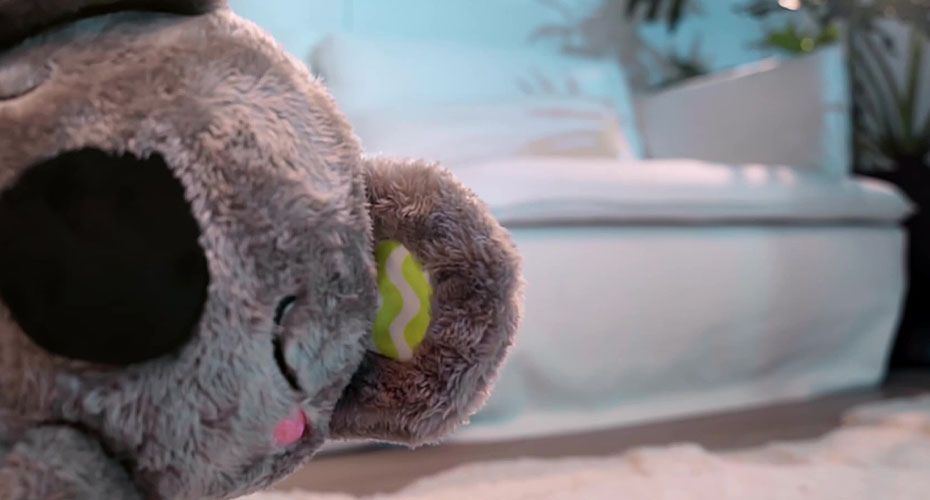
What makes INFUNITY’s plush toys different is that they’re designed with this long arc in mind. They’re not meant to be outgrown in a few weeks. As babies grow into toddlers, interaction shifts from pure sensory exploration to simple cause-and-effect and early imagination. Subtle interactive elements—like responsive feedback or gentle AI-assisted behaviors in future-facing designs—can support that transition without turning the toy into a screen substitute.
It’s also worth mentioning safety and trust, because sensory toys are literally in babies’ hands and mouths. Parents today are far more informed than before, and rightly so. According to global consumer surveys, over 70% of parents now rank material safety and emotional value higher than “smart” features when choosing toys for babies. INFUNITY comes from over 20 years of toy manufacturing experience, which shows in how materials are selected, tested, and finished. Good sensory toys don’t draw attention to safety—they quietly earn trust through use.
So when we talk about sensory toys for babies, maybe the better question isn’t “What does this toy do?” but “What does this toy support?” Does it support calm? Curiosity? Repetition without boredom? Emotional comfort? The best plush sensory toys do all of this in a way that feels natural, almost invisible.
INFUNITY’s plush toys are built around that philosophy. They’re not trying to replace parents, teaching, or real-world exploration. They’re there in the small moments: when a baby reaches out, squeezes, listens, calms down, and slowly begins to understand the world through their senses. And in early childhood, those moments add up to everything.
 Recommended for You