

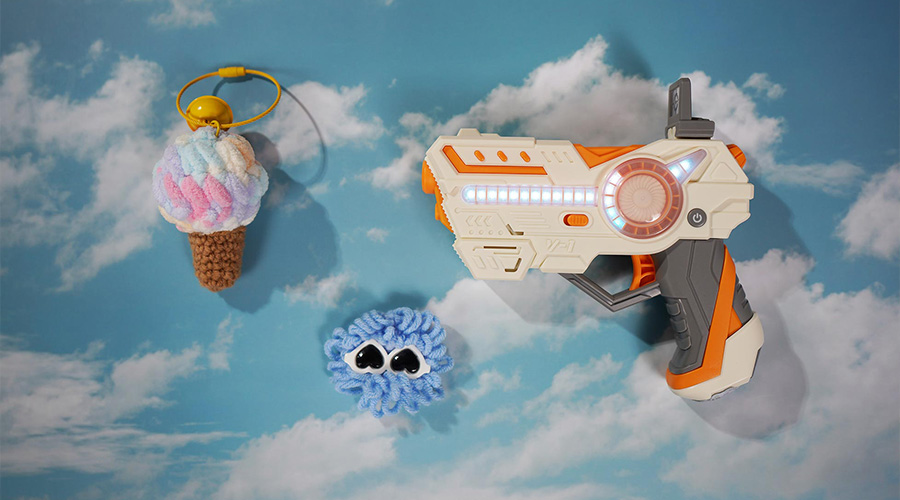
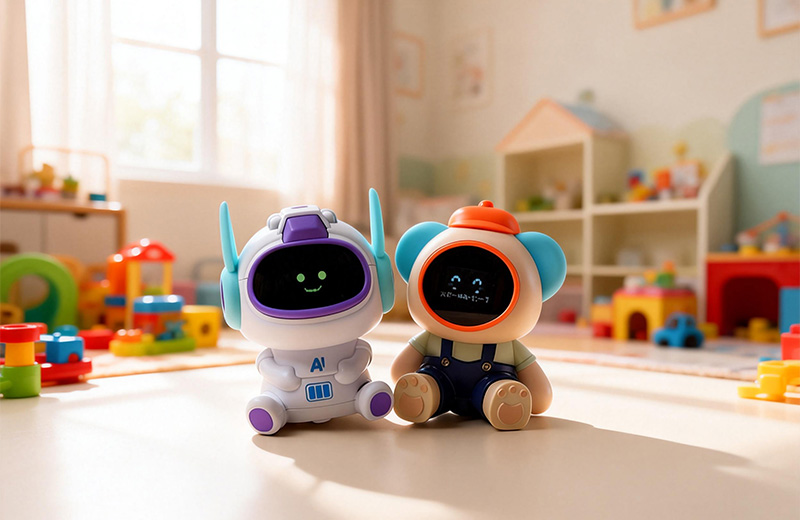
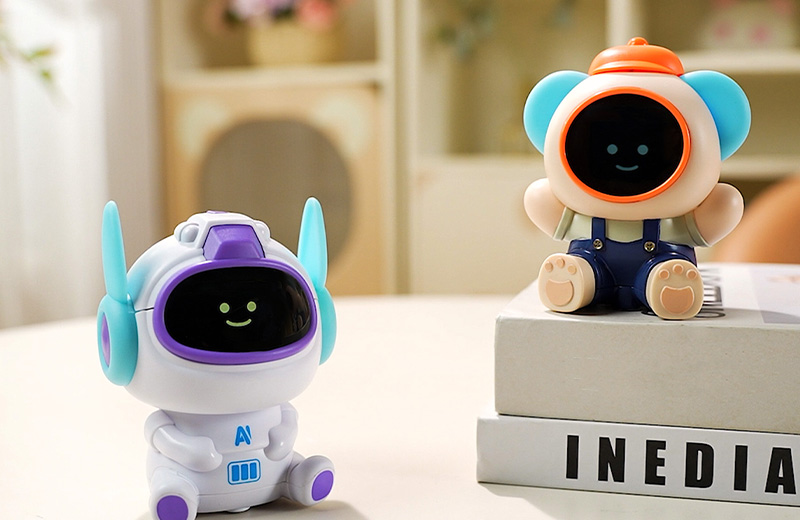
AI toys are products that embed artificial intelligence (dialogue models, recognition, emotional computing, knowledge graphs, etc.) into toys to endow toys with interaction, memory and scene perception capabilities. Compared with toy products, AI toys are equipped with large models, which can realize toys through recognition synthesis, face recognition, expression analysis, gesture recognition, tactile perception and feedback, image recognition, natural language processing, deep learning, emotion analysis and other technologies. Natural and diverse interaction and feedback with people, providing personalized learning and entertainment experience.
Begin your exploration.


 Recommended for You